
How to Choose A Better Location for Horse Portrait Photography
Although I have taken many horse portraits in barns and stable yards, some of my favourite images have been created outdoors, where the location becomes an important part of the story rather than simply a backdrop. When planning a horse portrait session, many people immediately think of woods, fields, or beaches, but often overlook the smaller details that can make a huge difference to the final image.
I hope this blog provides some useful ideas if you’re considering a horse portrait session with K2photographic or planning to take your own photographs. In a future blog, I’ll explore the key elements that make a strong horse portrait, including eye contact, angles, body posture, connection, and emotion. For now, let’s focus on one of the most important aspects of any portrait session: the location.
What Makes a Good Horse Portrait Location?
In my opinion, a good horse portrait location should provide:
- A safe and comfortable environment for both horse and handler.
- An uncluttered background.
- The ability to isolate the horse from distractions.
- Space where the horse can relax, move around, or take a break if needed.
- Good access and parking if the horse is being transported in a trailer or horsebox.
Once these practical considerations have been addressed, I begin thinking about the creative aspects of the location:
- What time of year will suit this location best?
- What colour is the horse I will be photographing?
- Am I aiming for a dark and dramatic image or a brighter, more polished portrait?
- How will the available light work with my chosen style?

Creating Clean Backgrounds
One of the easiest ways to improve a horse portrait is to simplify the background. Removing distractions helps draw the viewer’s attention directly to the horse.
Common distractions to look out for include:
- Fencing and gates.
- Buckets, feed bins, signs, and brightly coloured objects.
- Cars, trailers, and other vehicles.
- Pylons and overhead power lines.
- Farm machinery and equipment.
- Any object that appears to intersect with the horse’s head, ears, or the owner’s body.
Using a lens with a wide aperture, such as f/2 to f/4, can help blur distracting backgrounds by creating a shallower depth of field. Longer focal lengths also increase backgroun compression, helping to create a cleaner and more professional look. Just remember to ensure the important features of the horse remain in sharp focus
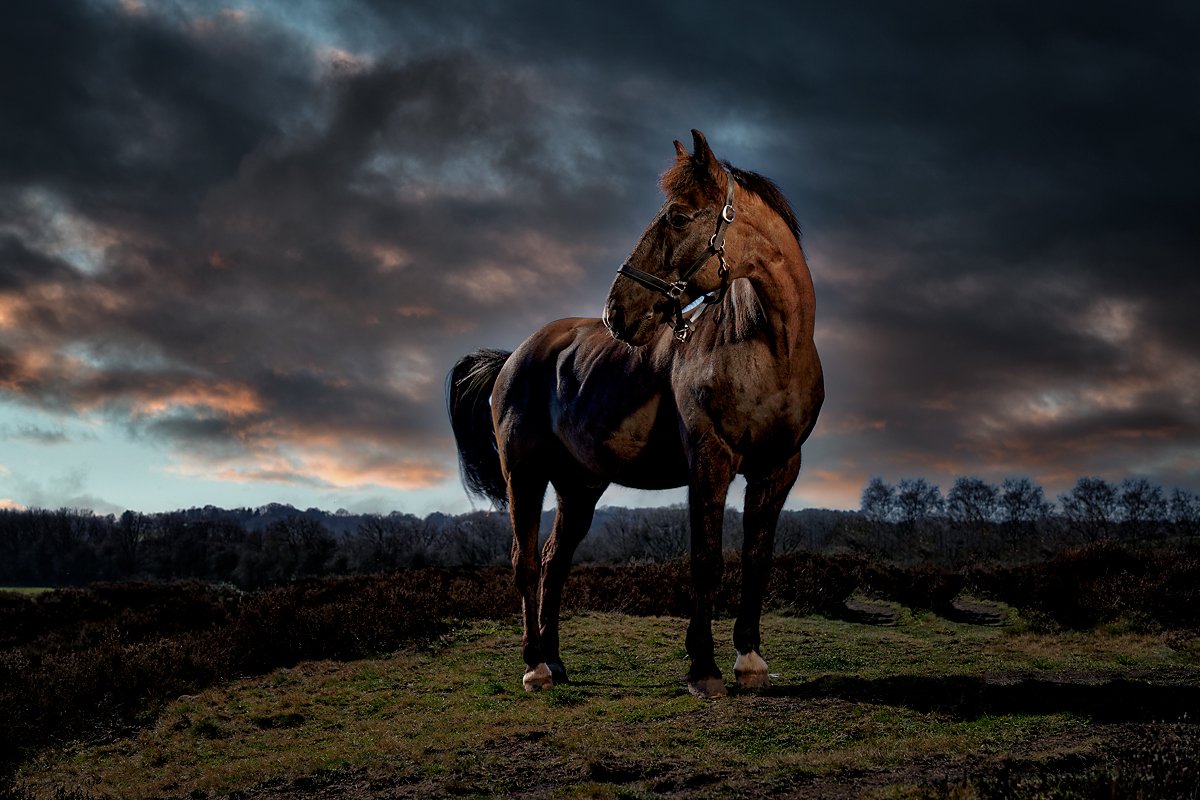
Understanding Ambient Light
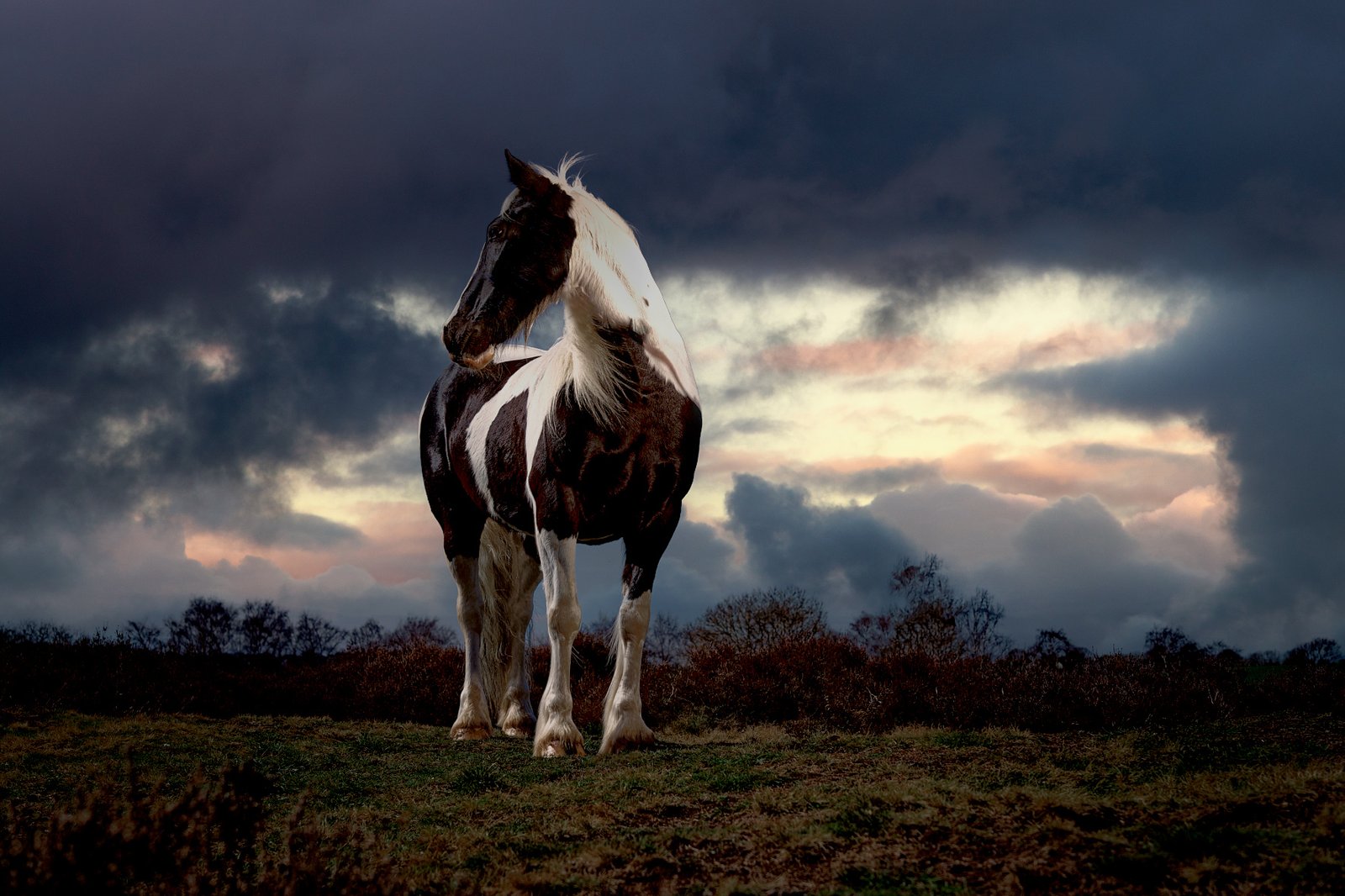
Whether you prefer natural light or work with off-camera flash, light has the greatest influence on the quality and mood of your images. The following are guidelines rather than strict rules:
- Avoid photographing in harsh midday sunlight whenever possible.
- Take advantage of open shade for softer, more flattering light.
- Make use of the warm tones and long shadows available during golden hour.
- Consider the colour of the horse’s coat, as darker horses often require different exposure settings to reveal detail and texture.

Types of Locations That Work Well
The ideal location will depend on the style of image you want to create, the time of day, the season, and the equipment you are using.
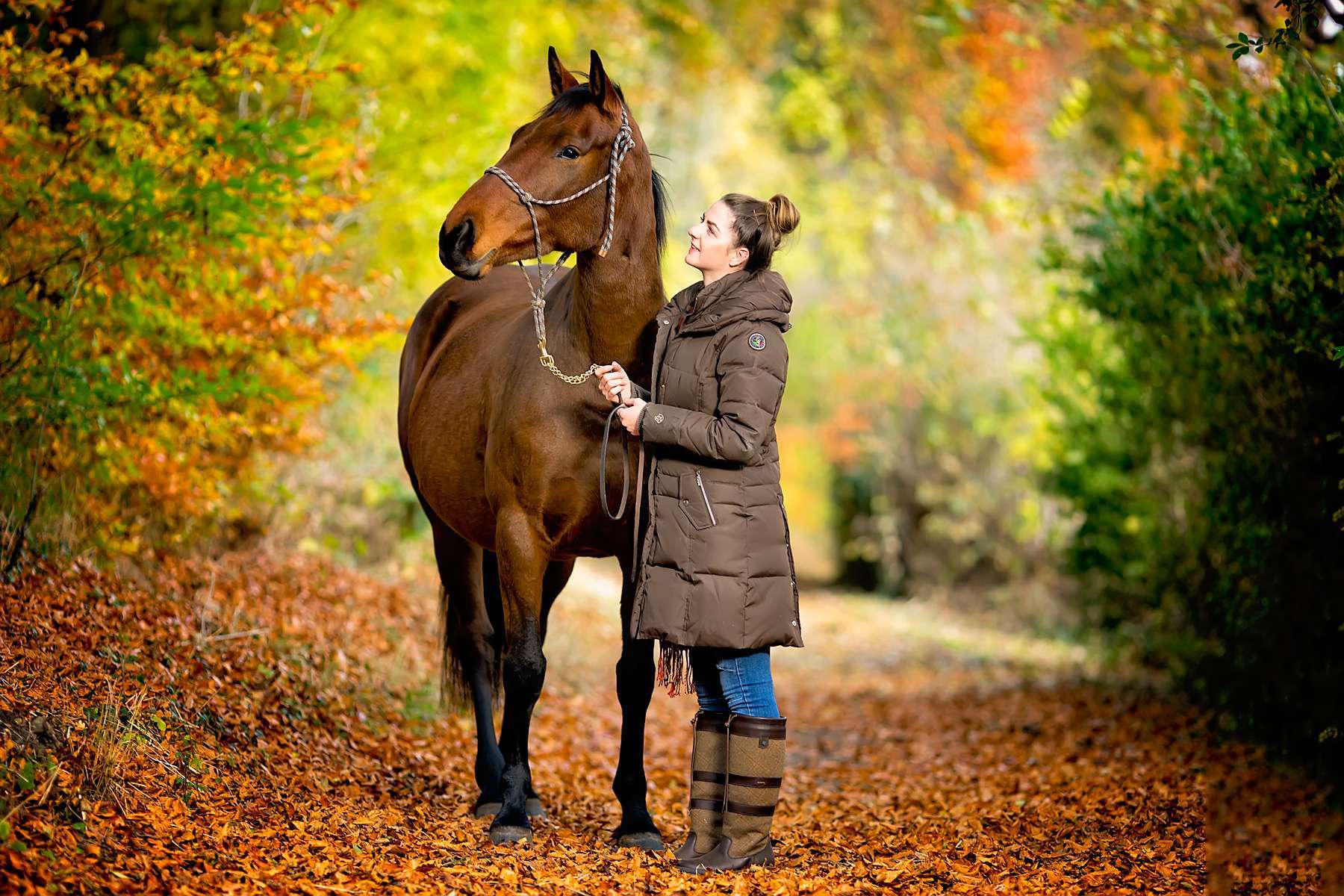
When I first started photographing horses, I was drawn to woodland paths and country lanes during autumn. The rich colours, textures, and natural leading lines provided beautiful settings for portraits. Over the years, I’ve photographed horses in a wide variety of locations, including beaches, open fields, woodlands, barns, and stable environments.
Because I use off-camera flash, I have greater control over the light and can shape it to achieve the look I want. However, even when using flash, I still pay close attention to the location and available light. The best results often come from blending flash with ambient light or choosing locations where the natural light complements the artificial lighting.
Woodlands and Tree-Lined Lanes
Wooded areas and tree-lined tracks can create stunning horse portraits, particularly when combined with longer focal length lenses. A lens such as a 70-200mm f/2.8 allows you to compress the scene and isolate the horse from the background while taking advantage of open shade and directional light filtering through the trees.
Most of my location portraits are taken using a 135mm f/2 lens, which produces beautiful background separation while maintaining a natural perspective.
Beaches
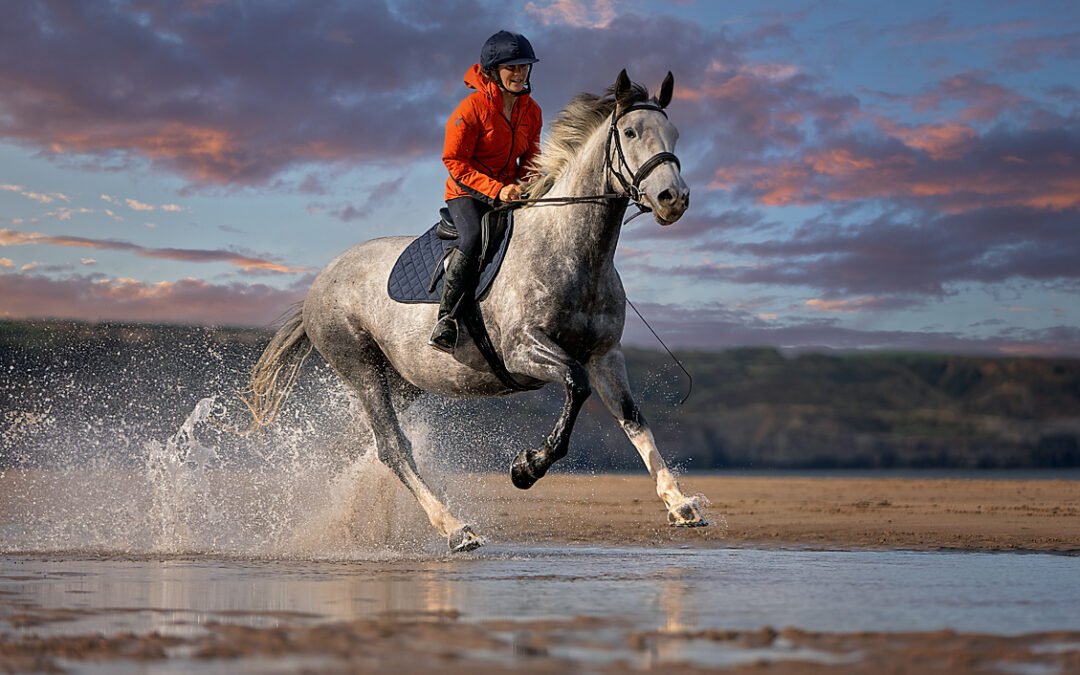
Beach locations can be spectacular for horse portrait photography. In my experience, overcast conditions often work best, as the cloud cover acts like a giant natural softbox. This creates soft, even light across the horse, allowing you to capture detail in both highlights and shadows without worrying about harsh contrast or overexposure.
Final Thoughts
The location you choose can have a significant impact on the success of a horse portrait. While beautiful scenery can certainly enhance an image, the best locations are often those that combine safety, simplicity, good light, and a setting that complements the horse’s character.
A thoughtful choice of location, combined with careful attention to light and composition, can transform a simple portrait into an image that tells a story.
You can download a PDF featuring some of my favourite horse portrait locations, along with example images, using the image link below.