WHAT MAKES A GOOD HORSE PORTRAIT?
What makes a good horse portrait? A truly honest answer is that “good” in portraiture is partly technical (measurable), partly conventional (shared taste with historical roots), and partly personal. Moreover, a western equestrian portrait tradition would be entirely different to a Japanese or Arabian artistic tradition, so all three would be viewed differently in relation to their particular perspective.
I will try and break that question down in to aspects that will provide some answers.
A truly honest answer is that “good” in portraiture is partly technical (measurable), partly conventional (shared taste with historical roots), and partly personal. Moreover, a western equestrian portrait tradition would be entirely different to a Japanese or Arabian artistic tradition, so all three would be viewed differently in relation to their particular perspective.
Why Are The Eyes Are Important?
As a general rule of thumb, a horse portrait should try and capture several qualities:
The Eyes & Expression The eyes are everything, the eyes need to convey life, so a simple catchlight will provide a good starting point for a strong equine portrait.
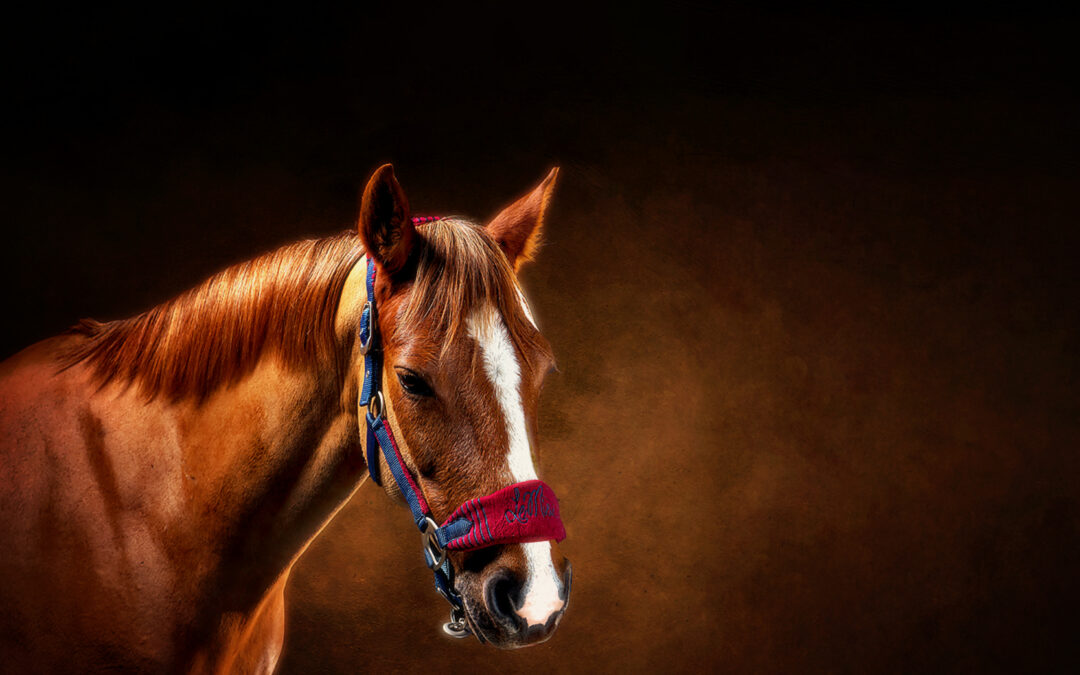
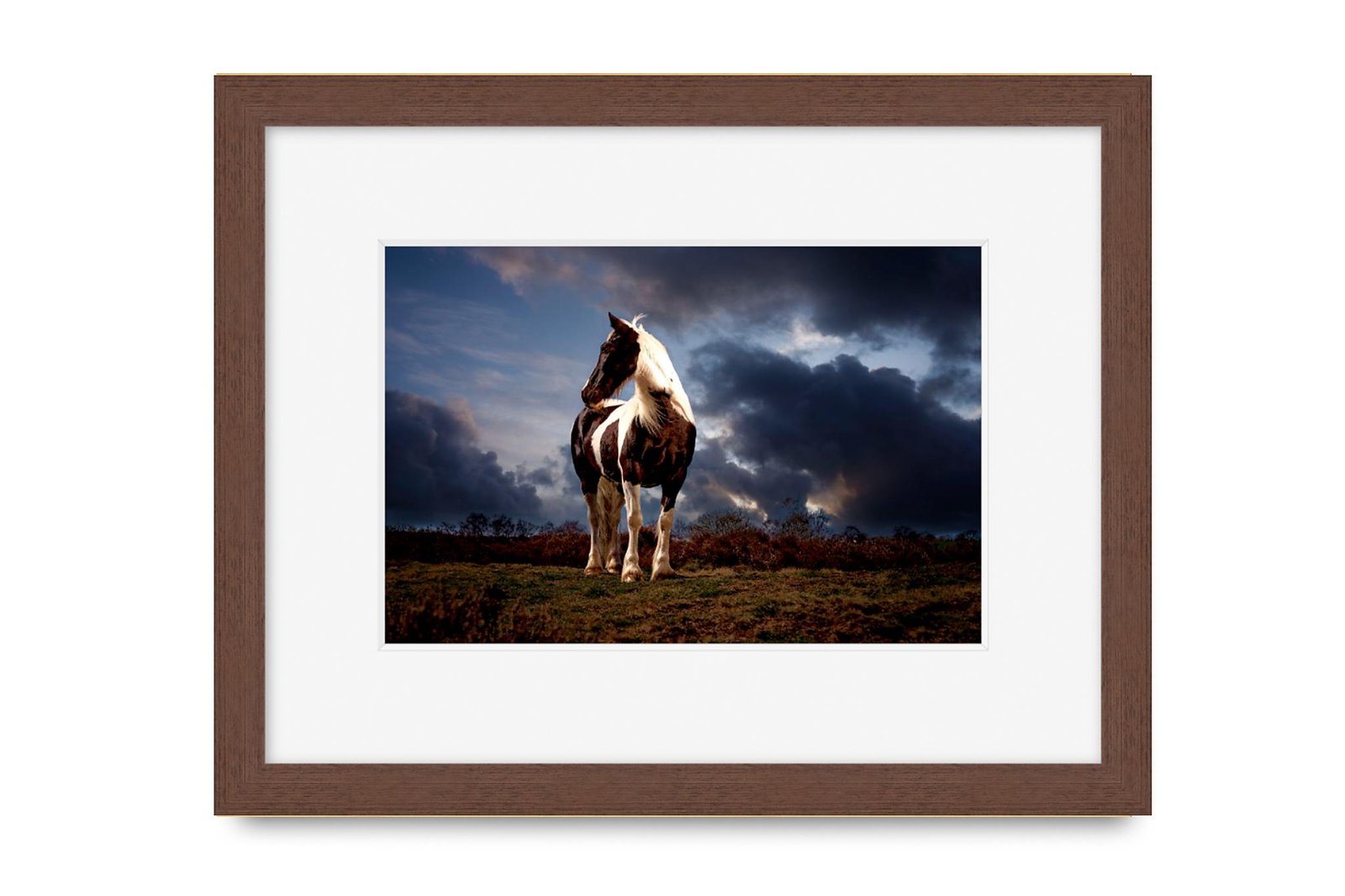
Artificial or Natural Lighting? Good lighting will make a lot of difference to how the horse looks. The advantage of off camera flash is that an experienced photographer can create light on demand and not have to wait for the right time of day or conditions. Using off camera flash can dramatically sculpt the contours of the head, revealing muscle definition, be it along the jaw and cheekbones or the full contour of the horse. Good lighting provides depth and a three-dimensional look. Harsh flat light flattens the horse. Different types and style of directional light will bring the image of the horse alive which is the reason the K2photogrphic use off camera flash on all of the horse portraits, focusing on a cinematic look.
Which Angle of The Horse? The angle of the horse makes a big difference, slight three-quarter angle (rather than dead-on profile or full front) tends to be most flattering and dynamic, as it shows both eyes while conveying the shape of the head and neck. That said, a strong profile can be elegant for horses with a particularly refined head or full length of the horse.
Why Should The Ears Be Forward? When a horse’s ears are facing forward, they look alert, pricked ears signal engagement and vitality. A droopy or pinned ear changes the entire mood of the portrait and usually indicates the horse wasn’t in a good mood at the moment the image was captured. Getting a handler to rustle something interesting just out of frame is a classic trick.
The Neck & Topline Including a bit of neck and shoulder grounds the portrait and shows off conformation. Cutting too tightly at the throat can make the head look severed and unnatural.
What Type Of Background? The background benefits when it is clean and uncluttered. Backgrounds can be, a plain wall, open sky, or blurred hedgerow. The important aspect of the background is keeping focus on the horse. Busy backgrounds compete for attention. Neutral or complementary tones work best. A dark bay pops against a pale sky; a grey horse benefits from a darker backdrop. Having stated the above exceptions might include the hues of autumn colours.
Coat Condition & Grooming A freshly brushed coat with a sheen catches the light beautifully. Clipped whiskers, a pulled mane, or a plaited forelock can sharpen the look for a more formal portrait.
When Is The Best Time For A Horse Portrait? In relation to natural light, the golden hours (early morning or late afternoon) can produce warm, flattering light that suits chestnuts, bays, and roans especially well. Overcast days can actually be lovely for greys and dapples diffuse light eliminates harsh shadows. Midday light can be very harsh, especially if photographing in the open. A useful tip, try and find areas with open shade.
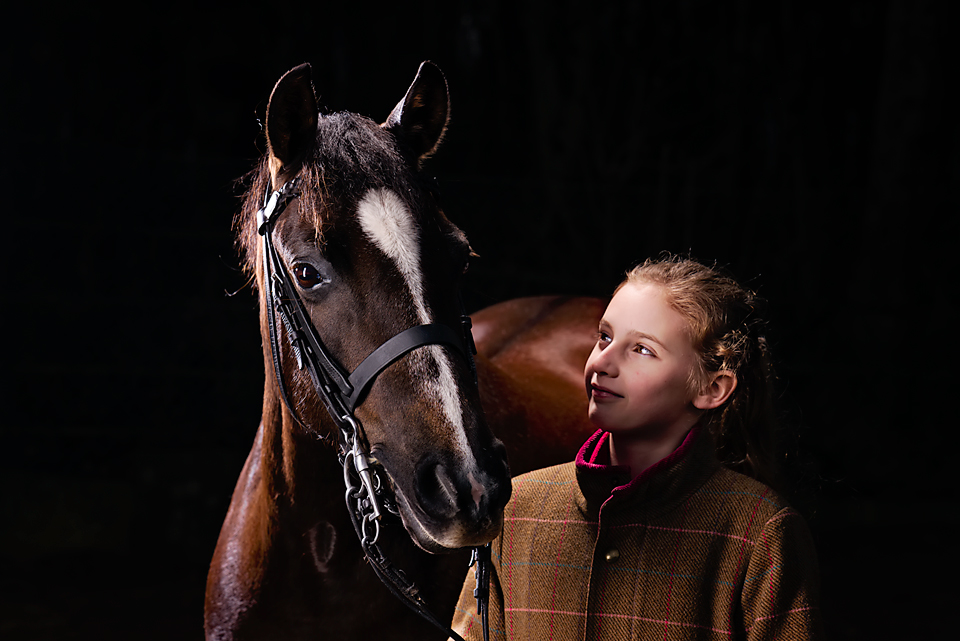
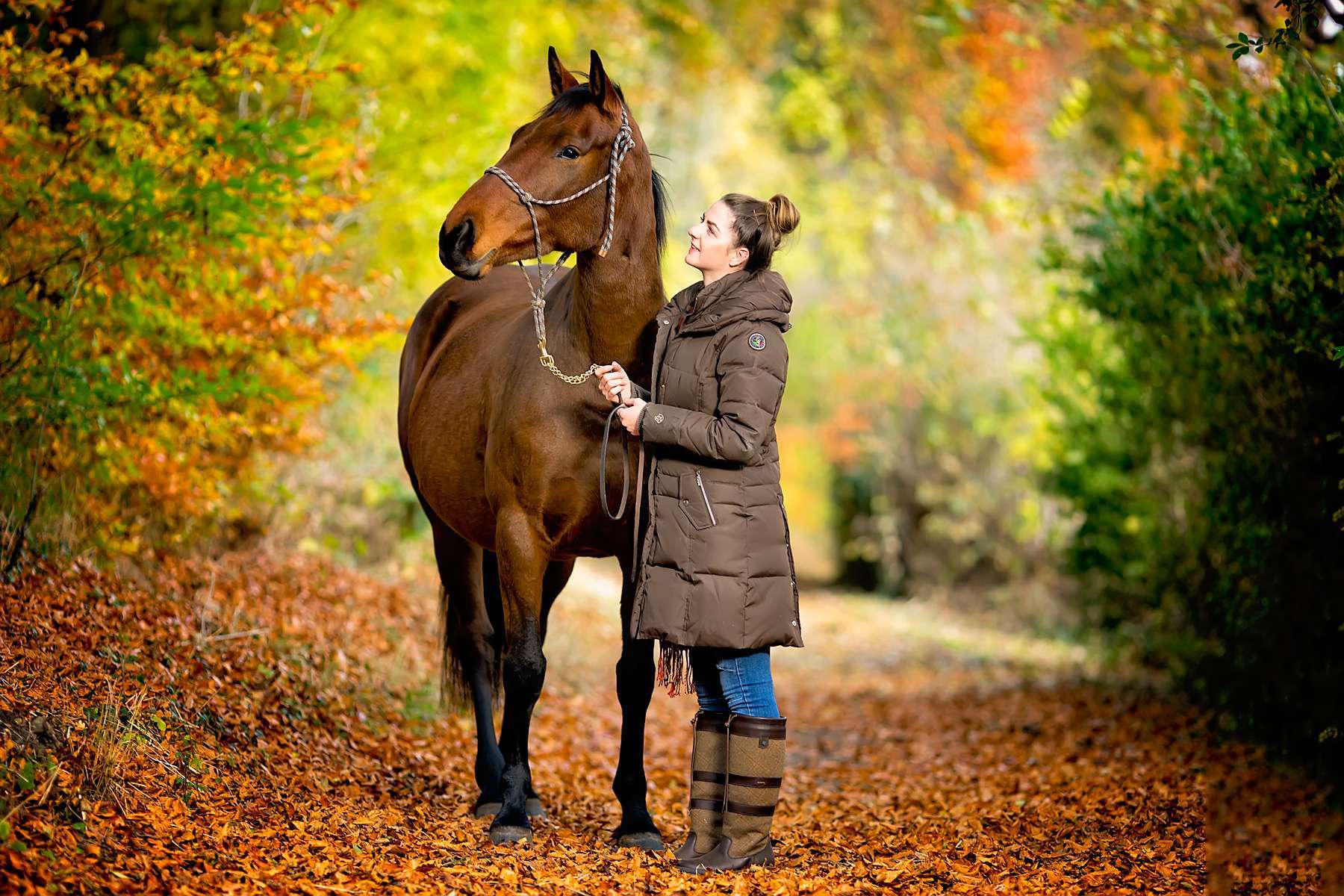
Connection with the Subject The best portraits often come from a photographer or painter who takes time to let the horse settle and become curious, rather than rushing the session. That moment of genuine curiosity happens best when, the horses head is slightly raised, the ears are pricked and the eyes soft and bright, is what can separate a great portrait from a competent one.
Whether painted or photographed, the goal is the same: make the viewer feel they’re meeting a specific individual, not just “a horse.