What Makes A Horse Portrait Photograph Cinematic?
What Makes A Horse Portrait Photograph Cinematic?
Many UK equine photographers that say they do cinematic horse portrait photography rely mostly on natural light and dominant use of photoshop to create black background for their horse portraits. Very few equine photographers in the UK use off camera flash for their shoots and those that do, predominantly use off camera flash as fill which really helps lift an image. If equine photographers that use flash as fill (light) why does that not make the image the produce cinematic if they are combining ambient light with off camera flash?
Cinematic off-camera flash horse portrait photography is less about simply lighting a horse and more about creating a dramatic, film-like mood that feels intentional, controlled, and emotionally expressive. It borrows heavily from cinema lighting, portraiture, and fine-art techniques. The off-camera flash lighting isn’t there just to “expose the horse” it sets a mood or narrative.
-
Intentional, Story-Driven Lighting 🎬
Common cinematic traits:
- Directional light (often from the side or behind)
- High contrast between highlights and shadows
- Light used to sculpt muscle, bone, and texture
- Shadows are embraced, not filled away
You might see:
- A single key light mimicking late-afternoon sun
- Rim or hair light to separate the horse from the background
- Dark, underexposed environments with the horse selectively lit
This is very different from flat, evenly lit equine photography.
-
Off-Camera Flash as “Controlled Sunlight” ☀️
Off-camera flash is used to replace or enhance natural light, not overpower it.
Typical techniques:
- Large softboxes or octaboxes placed at an angle
- Bare or gridded flash for harder, more dramatic edges
- Flags or grids to prevent light spill
- Flash balanced below ambient to keep the scene natural
The goal is often:
“It looks like beautiful light happened — not like a flash fired.”
-
Film-Like Contrast & Tonal Depth 🎞️
Cinematic imagery often has:
- Deep blacks
- Smooth highlight roll-off
- Rich midtones
- Reduced overall brightness
Photographers may:
- Underexpose ambient by 1–3 stops
- Light only part of the horse (face, neck, shoulder)
- Leave the background dark or textured
This creates a three-dimensional, cinematic feel, similar to film stills.
-
Composition That Feels Like a Movie Frame
Rather than “pretty horse standing nicely,” cinematic portraits often:
- Use negative space
- Crop boldly
- Place the horse off-centre
- Include environmental elements (mist, dust, rain, barns)
The horse becomes a character, not just a subject.
-
Mood Over Perfection 🖤
Cinematic equine portraits may include:
- Lower key lighting
- Grit, dust, wind, rain
- Serious or powerful expressions
- Minimal or no tack
They’re often:
- Dark
- Emotional
- Powerful
- Slightly raw
Perfection gives way to atmosphere.
-
Post-Processing with a Film Mentality
Editing is restrained but purposeful:
- Controlled contrast
- Muted or earthy colour palettes
- Subtle colour grading (cool shadows, warm highlights)
- Texture retained in coat and background
Nothing overly glossy or HDR-like.
-
How It Differs From Other Horse Portrait Photography
|
Style |
Key Difference |
|
Traditional equine |
Even, natural light, full detail everywhere |
|
Commercial |
Clean, bright, catalogue-ready |
|
Cinematic off-camera flash |
Dramatic, directional, emotional |
In One Sentence
Cinematic off-camera flash horse portrait photography uses controlled, directional artificial light to create dramatic, film-like images that prioritise mood, depth, and storytelling over simple documentation.
Light Is Treated as the Subject, Not an Add-On
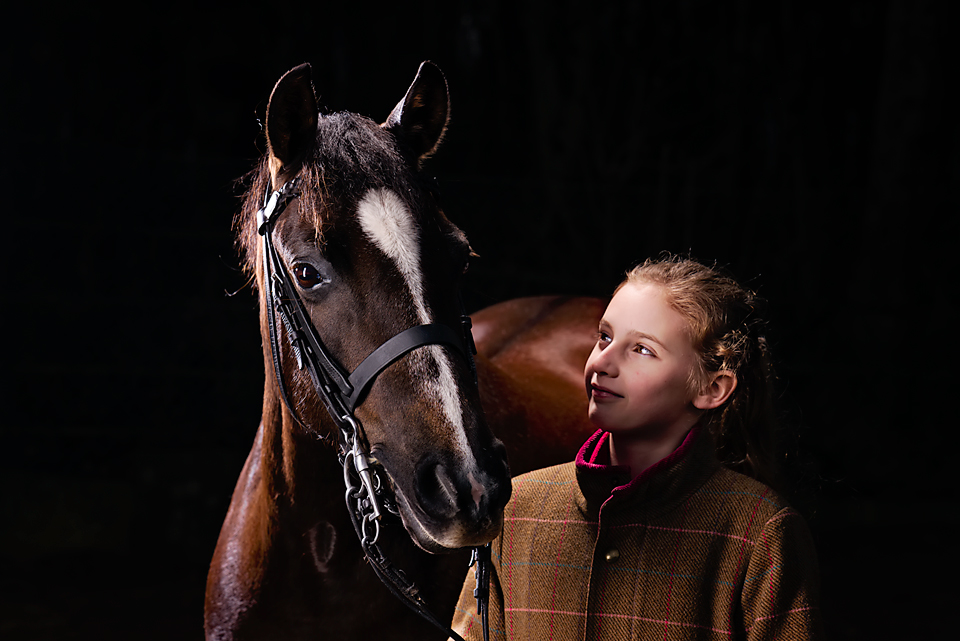
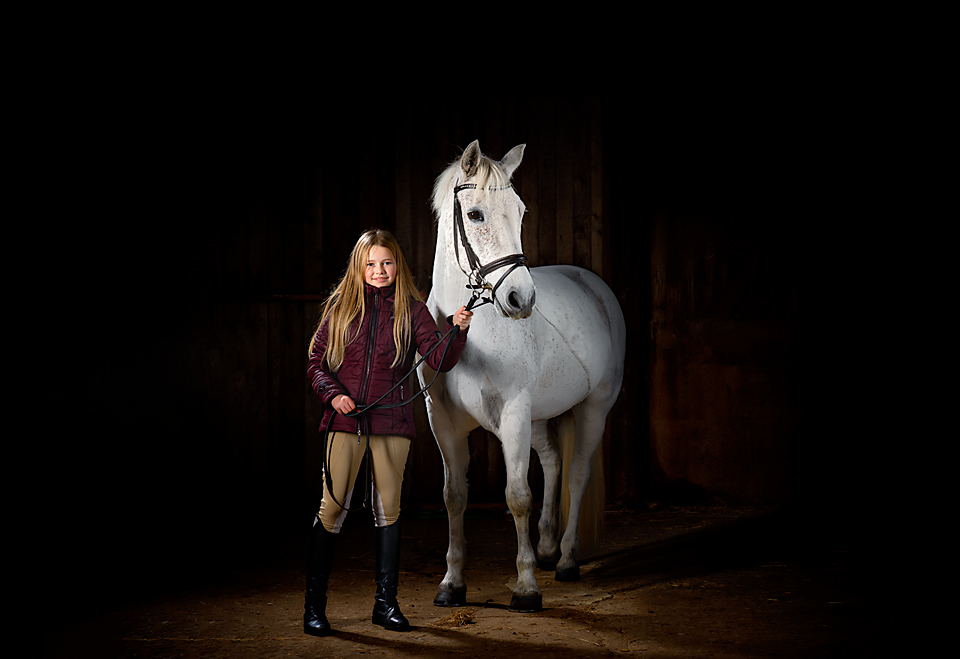
What’s happening:· A dominant key light placed off-axis (often 45–90°) · Light shaped to roll across muscle and bone, not flatten it · Ambient exposure deliberately pulled down (often −1 to −2 stops)
Cinematic result:
· The horse appears lit, not just visible · Shadows are intentional, not accidental · The viewer reads the image as dramatic and authored
🎬 This mimics film lighting, where the light defines the scene’s mood. Background Suppression Creates Subject Isolation A huge cinematic cue is separation. How it’s achieved: Flash power balanced so the subject is correctly exposed Ambient light is underexposed so backgrounds fall darke Distance between horse and background is used strategically Why it matters: • The eye is pulled immediately to the horse • The scene feels contained, like a frame from a movie • Visual clutter disappears without heavy Photoshop tricks
🎥 This is the same principle used on film sets to isolate characters.Directional Light Reveals Anatomy (Not Flat Illumination) Cinematic images show form, not just surface. K2photographic’s lighting approach: · Light comes from one clear direction · Muscles, neck lines, and facial structure catch highlights · Shadows fall away naturally, giving depth Contrast with non-cinematic work: • Flat light = documentary • Directional light = narrative
🐎 Horses are physical, sculptural subjects — this lighting treats them like that.Controlled Colour and Tonal Range Cinematic images avoid: · Overly bright whites · Crushed blacks · High-saturation “Instagram” colour What you’ll notice instead: · Muted, cohesive colour palettes · Warm highlights / cooler shadows (subtle split toning) · Smooth tonal transitions
🎞 This mirrors cinematic colour grading, not consumer photography presets.Composition Feels Like a Still from a Scene Cinematic images imply before and after. Visual choices that create this: · Space around the subject (negative space) · Slightly off-centre framing · Eye-lines that lead out of frame Effect on the viewer: • The image feels like part of a story • The horse isn’t “posing” — it’s present
🎥 This is why the images feel like a paused moment, not a portrait session.Consistency Across the Portfolio One cinematic image can be accidental. A cinematic body of work is intentional. K2photographic’s consistency shows: · Repeatable lighting setups · Predictable tonal response · A recognisable visual signature This tells experienced viewers: “This photographer understands lighting — this isn’t luck.”
Why Cinematic Horse Portraits Stand Out in the UK Equine World
Many UK equine photographers: · Rely heavily on natural light · Chase moments rather than build scenes · Use flash defensively, not creatively
K2photographic Style: · Builds the scene · Controls every variable possible · Uses flash as a storytelling tool That’s why K2photographic’s work feels closer to cinema than countryside photography. 🐎 In One Sentence K2photographic’s images feel cinematic because the light is intentional, directional, controlled, and repeatable — creating depth, mood, and subject isolation in the same way film scenes are lit.
|
|