Behind The Scenes: An Overview of My Cinematic Lighting Process With Strobes – Off Camera Flash.
I thought I’d write a short introduction about how I got into lighting, as I personally think a bit of context is both important and useful. That said, if you’re here purely for the lighting side of things, feel free to scroll straight down to “My off-camera flash lighting in relation to cinematic lighting” I won’t be offended, much.
Although I worked in a theatre in my early 20s for a couple of years, starting out as a stagehand and eventually rigging lights and operating spotlights and sound desks, I didn’t have the benefit of any formal photography lighting training, particularly in a studio environment. My journey into lighting has mostly been self-inflicted: reading books, studying images, practicing, reflecting and then repeating that cycle more times than I care to admit.
Personally, I think one of the reasons people find lighting difficult is because it’s often introduced in very technical terms. The moment phrases like “lighting ratios” or “inverse square law” appear, you can almost hear brains quietly switching off. Those concepts do matter eventually, but they shouldn’t be the barrier that stops peopl experimenting. Like most worthwhile things, lighting takes time, patience, and a willingness to get it wrong, repeatedly.
This blog isn’t about teaching lighting ratios or diving into the physics of light. There are plenty of excellent resources for that. My aim is simpler: to share behind the scenes images and explain why I used certain strobes, angles, and modifiers. Hopefully, that encourages a bit of experimentation, especially with portable, battery-powered flash.
I think I’ve always noticed light and colour, even as a child. I asked for a camera when I was about ten or eleven, what I got was a point and shoot rather than an SLR, but you take what you’re given at that age. Unfortunately, my early photography ambitions were quickly limited by the cost of film and development (a cruel business model for an enthusiastic child), but the interest never really went away.
I can’t remember exactly when I bought my first digital camera as an adult, the kind where you can control shutter speed, aperture, and ISO. I do remember being completely hooked when I could control those settings. Within about five years, I’d upgraded through several DSLRs. Through skiing and kayaking trips across Europe and the USA, I naturally became the one documenting everything. At the time, I was working full-time as a Senior Youth Worker, which conveniently funded my growing camera habit.
This is when I bought my first manual flash and started experimenting both indoors and outdoors, mostly by blasting light at everything and wondering why it looked terrible. Despite this highly scientific approach, I was having a lot of fun and occasionally producing what I thought were decent images.
Around that time, someone introduced me to Strobist, and not long after, I met David Hobby in London. Meeting him was a bit of a turning point, his approach to using battery powered strobes really clicked with me, and from that point on, I was properly hooked as was my spending.
Over the next few years, I helped out at a camera club teaching beginners how to shoot in manual mode, and I also ran photography sessions in schools through my youth work role. Photography turned out to be a brilliant way to engage young people, creative, practical, and a nice break from being told to sit still. The sessions were accredited through the Open College Network, so the young people gained something tangible from it as well.
Using flash and gels in those sessions pushed me to understand lighting more deeply, I needed to explain why things worked, not just that they did. In many ways, the young people were stretching my learning as much as I was stretching theirs.
At weekends, I started photographing anything that caught my interest: horses, cars, motorbikes, yachts, reenactments, if it didn’t move, I’d photograph it and if it did move, I’d still try. I set up a mini studio in a spare bedroom and even bought a shop mannequin to practice portrait lighting. It didn’t complain, didn’t move, and was infinitely patient, arguably the perfect subject.
Before being made redundant in 2013, I’d started receiving commissions for horse trials and gaining media accreditation. I’d also shot a few weddings and paid jobs, so when redundancy came along (as it does), photography seemed like a viable way forward, if slightly terrifying.
As I tried to turn photography into a living, I knew I needed to stand out. Since I was already photographing horses at events, horse portraits felt like a natural progression. The question was: how could I make them different?
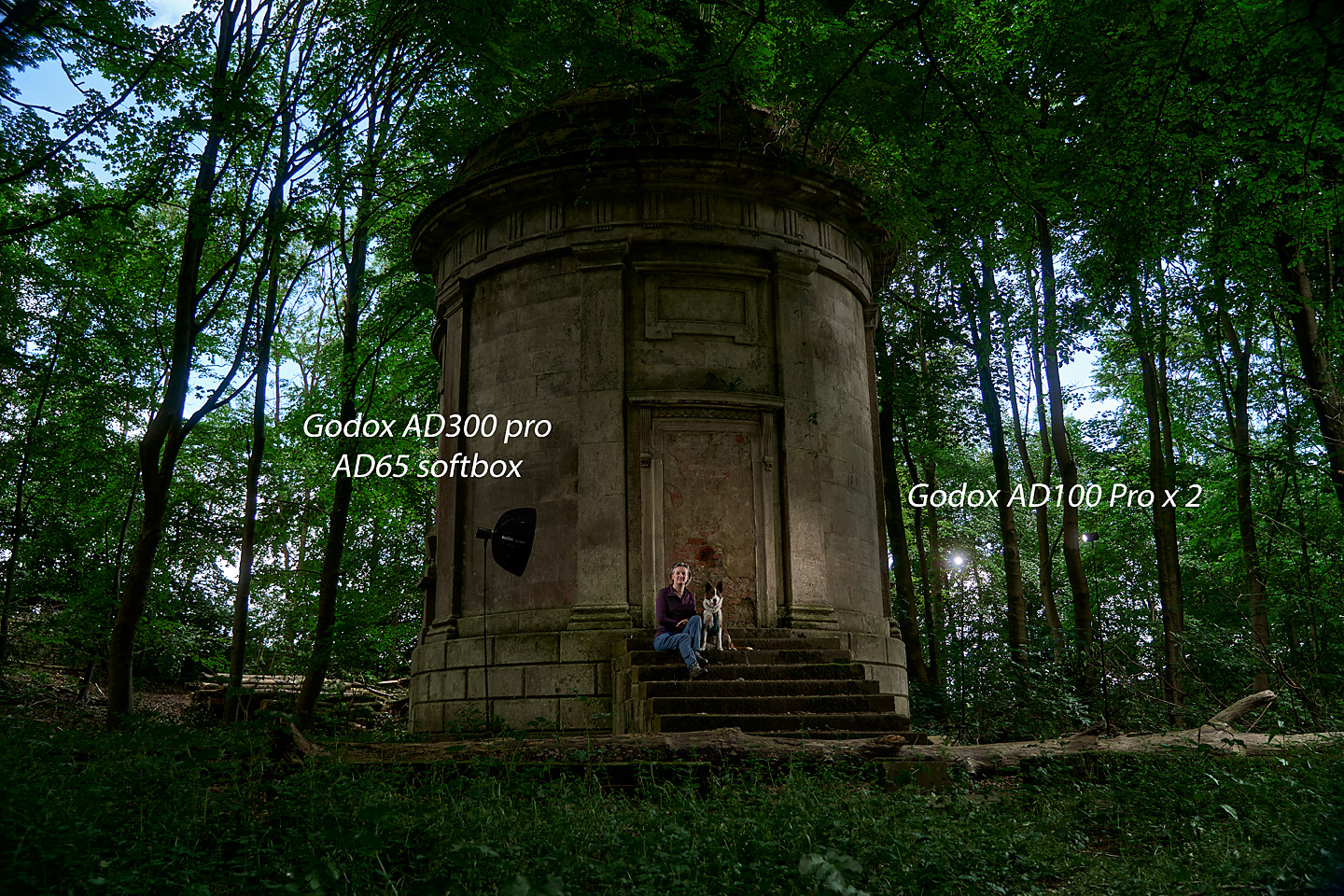
Behind The Scenes Image Lighting Stand Placement
In this image you can see the Godox AD300 pro with AD-65 softbox on the left, with two Godox bare AD100’s to the right of the frame. The Main light is coming from the Godox AD300 and the two Godox AD100’s are providing some accent and rim light. This is basic cross lighting.
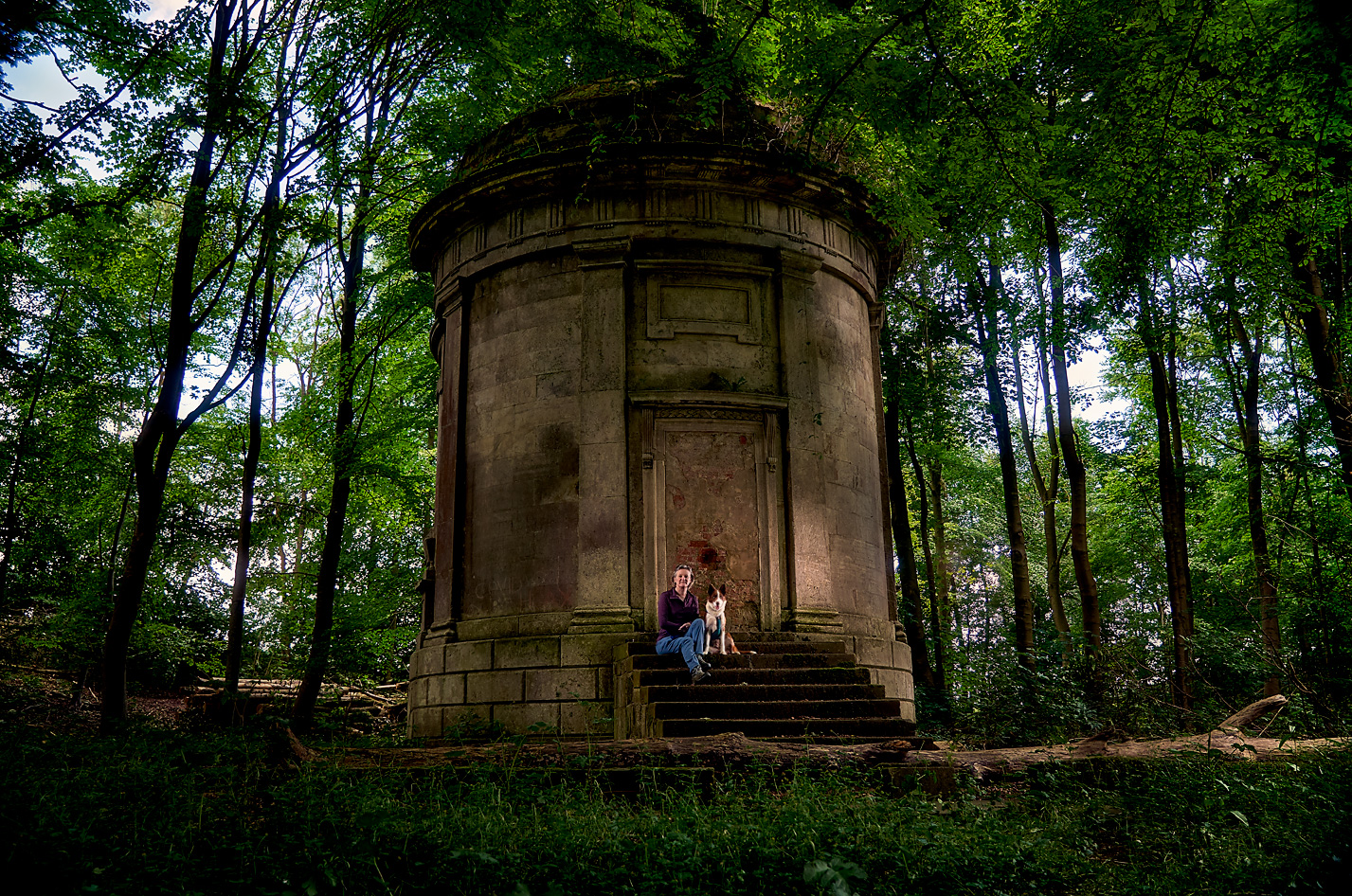
Final Edited Image
I used a plate shot with the lightstands removed so that I could blend the ambient image without lighting with the images where lighting was prodomanent. I then editted the image using dodgining and burning together with some tonal colour adjustments to create the final look of the image.
My off-camera flash lighting in relation to cinematic lighting
So how did it all start?
I initially used social media to ask if anyone would be interested in a free horse portrait. I explained what I was trying to achieve, I needed to build a portfolio, and fortunately, a few brave volunteers trusted me with their horses.
I chose to shoot in autumn, using the rich colours to add impact while mixing flash with ambient light. In that first year, I photographed around six people, hardly a production line, but enough to get started.
My early setup was fairly simple: a light on either side of the horse, using a soft silver umbrella and a softbox. I quickly realised I needed heavy-duty light stands and sandbags, because outdoor lighting modifiers have a habit of turning into kites at the worst possible moment.
For the next couple of years, that was my main setup. During that time, I was learning not just about lighting, but about horse behaviour, particularly how to introduce lighting equipment without causing chaos. My wife Fran played a crucial role here, often acting as a human stabiliser whenever the wind decided to get involved.
Eventually, I moved towards more wind-resistant modifiers like reflectors. A strip box combined with a large reflector, or a Magnum reflector which gave me more control and fewer airborne incidents. I also began experimenting with long-throw reflectors.
In terms of real progress, things started to click when I learned to feather light and place it at less “traditional” angles. Unlike human subjects, you can’t politely ask a horse to “just turn slightly to the left,” so light placement becomes absolutely critical.
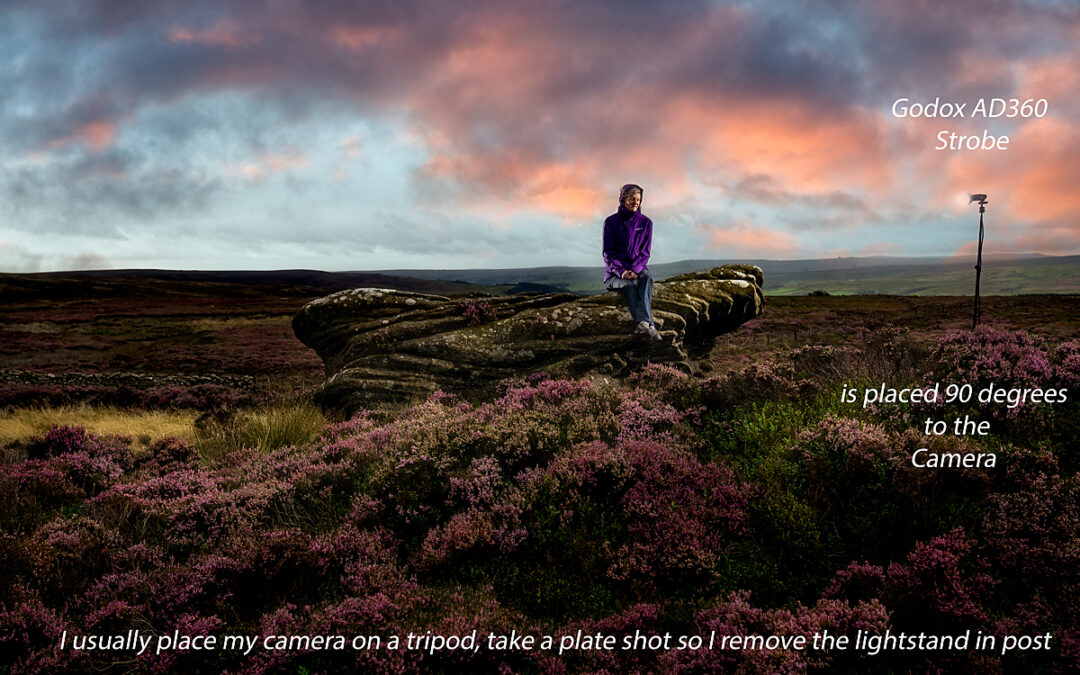
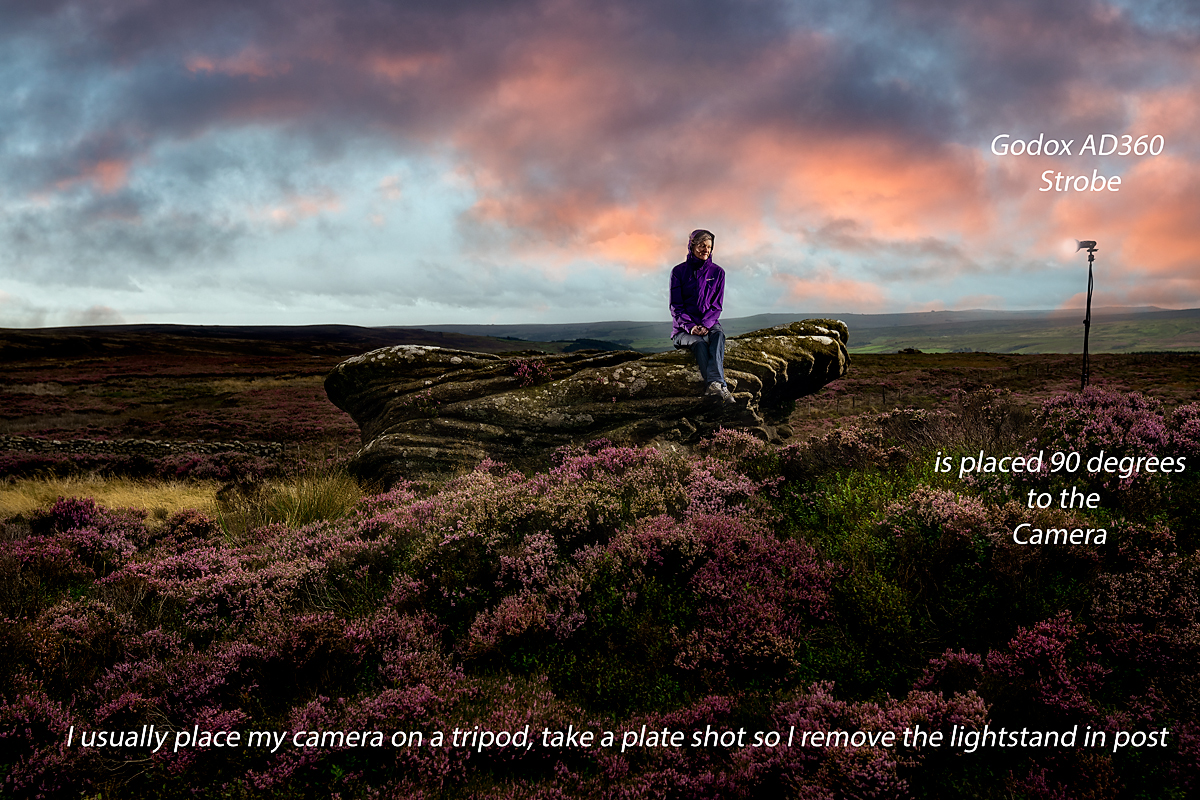
I found that placing the key light at around 90 degrees to the camera often worked well. It simplified things and created a look that suited horses.
Over time, I moved away from purely autumnal shoots. I wanted more variety, more mood. I think my theatre background started to creep back in, thinking about how a stage is lit (or deliberately not lit) influenced how I approached scenes. I also began paying closer attention to films, often asking myself: where is that light actually coming from?
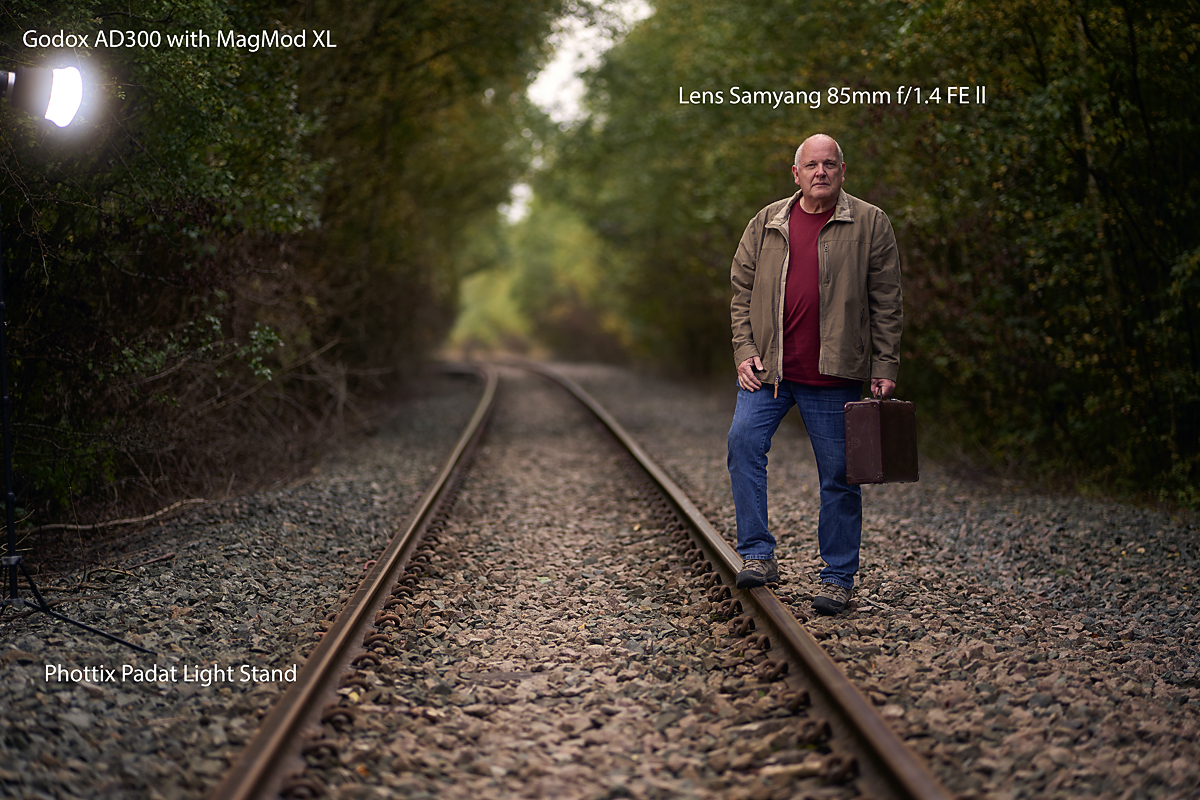
Behind The Scenes Image One Light Lighting Stand Placement
This image provides an exaple of what can be achieved with just one light via a very portable lighting setup using just one Godox AD300 Pro, paired with a XL Magmod Magsphere. This lighting modifier provides a very similar look to a shoot through umbrella. I am feathering the light which gives the illusion of the lighting looking softer and from a larger light source.
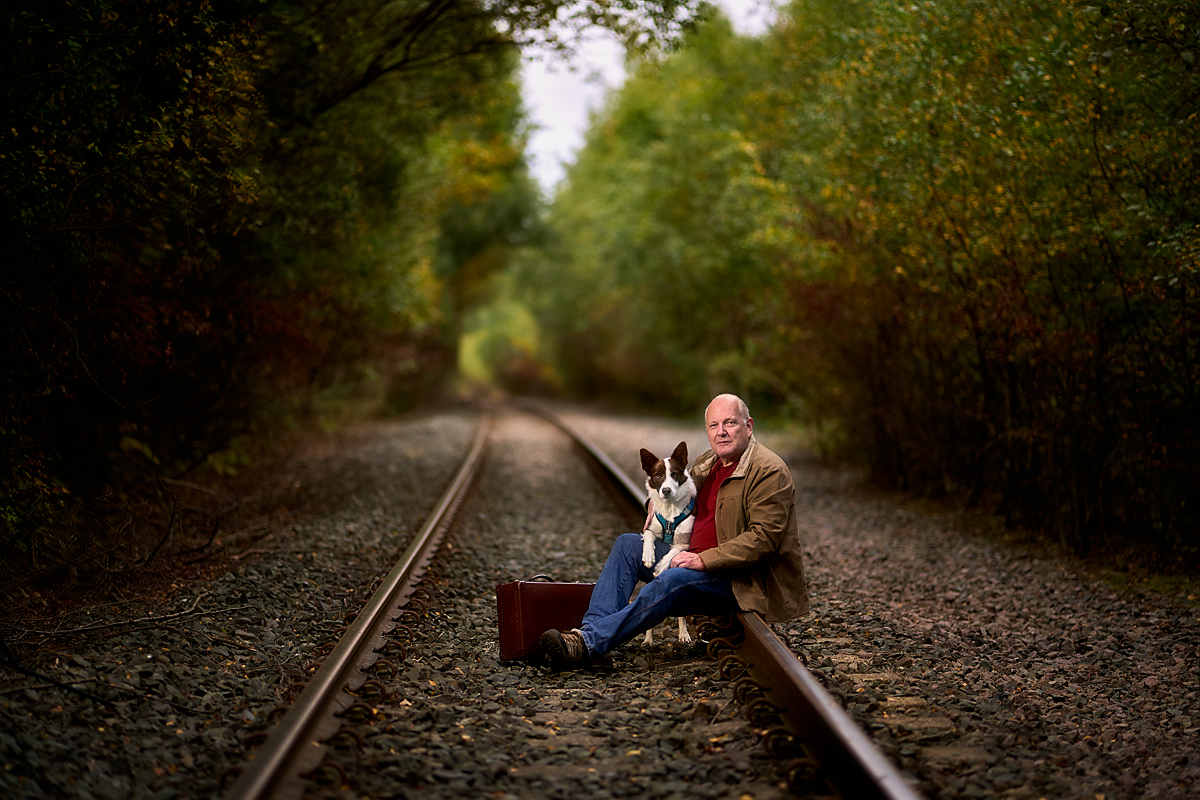
Final Edited Image
In this image I did not use a plate shot, I removed the light stand and Magmod XL Magsphere via Photoshop. Through editing in Photoshop I darkened the foreground and then used some dodgining and burning together with some tonal colour adjustments to create the final look of the image.
Working outdoors with flash is both a blessing and a curse. It forces you to think carefully about location and how to use available light to your advantage. Early on, I assumed power was everything, but more powerful strobes are usually bigger, heavier, and more expensive (and less fun to carry across a muddy field).
These days, I prioritise portability and practicality. I’ve definitely spent money on lighting gear that didn’t solve the problems I thought it would, but in fairness, those mistakes taught me a lot.
While I still use softboxes and strip boxes, I’ve become much more reliant on reflectors, particularly the Magnum reflector, which has become a firm favourite.
In studio environments, soft light tends to dominate because you have full control over ambient light. Outdoors, that control disappears, and everything becomes more of a negotiation.
The cinematic style I’m drawn to is partly born out of necessity. Large soft modifiers outdoors can be impractical, they catch the wind, drain strobe power, and complicate things quickly. On certain horse colours, overly soft light can also flatten the image more than I like.
Harder light, on the other hand, is often misunderstood and avoided. But with practice, it can be incredibly versatile and effective—especially when combined with thoughtful placement and a bit of patience.
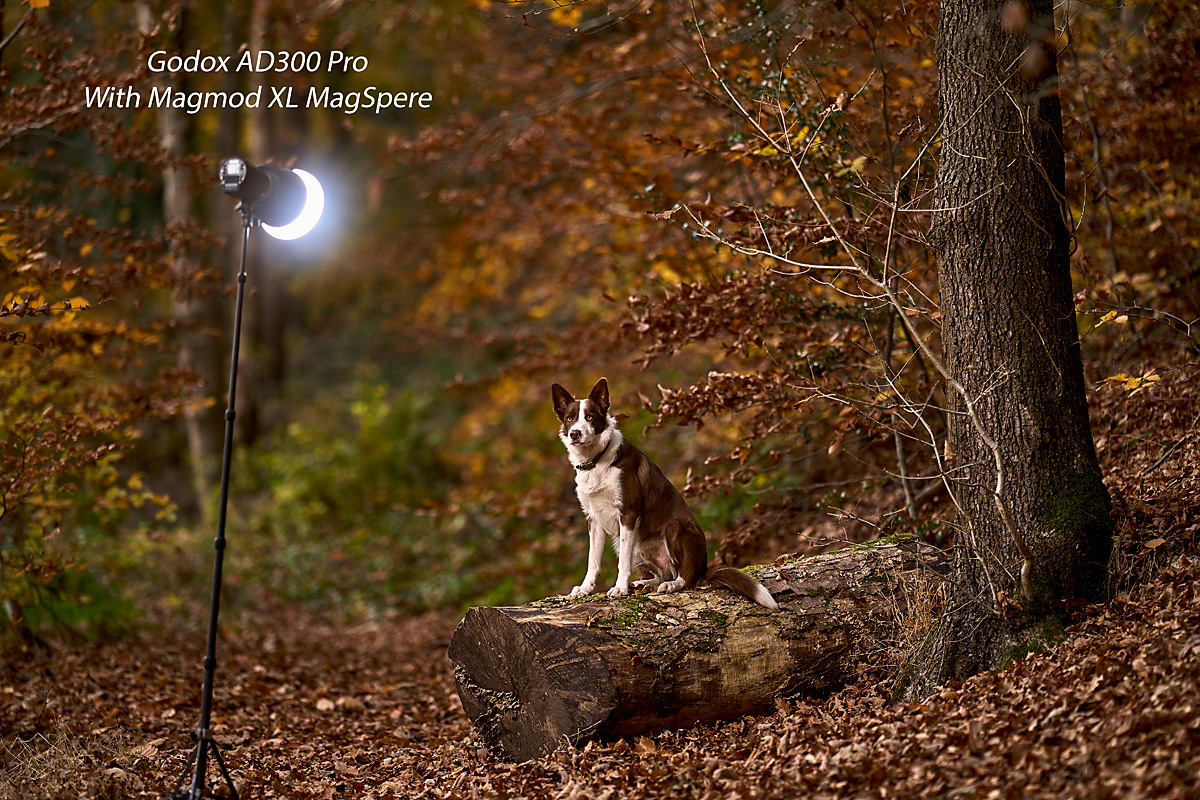
Behind The Scenes Image One Light Setup Magmod XL Magsphere
A very portable and simple lighting setup using just one light, a Godox AD300 pro with a MagMod XL Magsphere. This modifier creates the look of a shoot through umbrella without the bult and wind risk potential. As the modifier is made of silicon, is can easily be squashed up and placed into a back pack. Notice how the light is place more in front of Rio and is not feathered. An ideal lighting setup when you want to keep things simple and light weight.
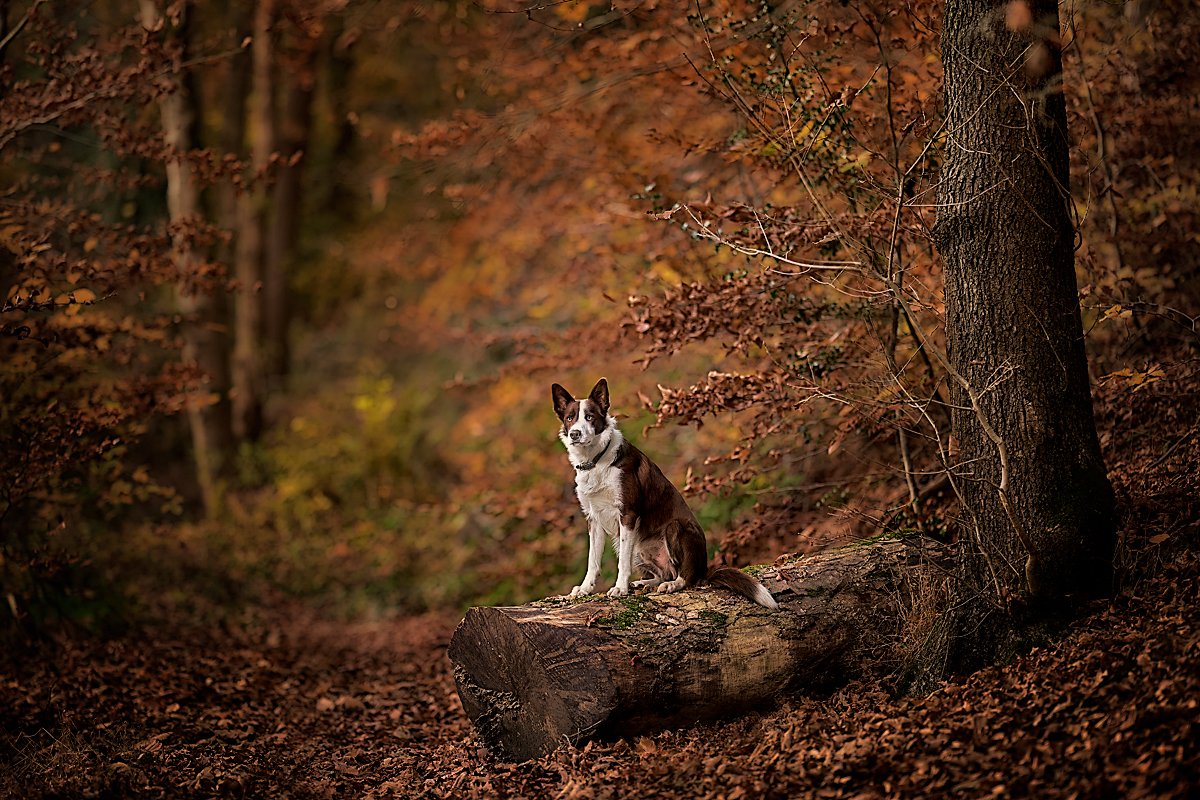
The Final Edited Image
Again in this image I did not use a plate shot, I removed the light stand and Magmod XL Magsphere via Photoshop. Some dodgining and burning together with some tonal colour adjustments to create the final look of the image.
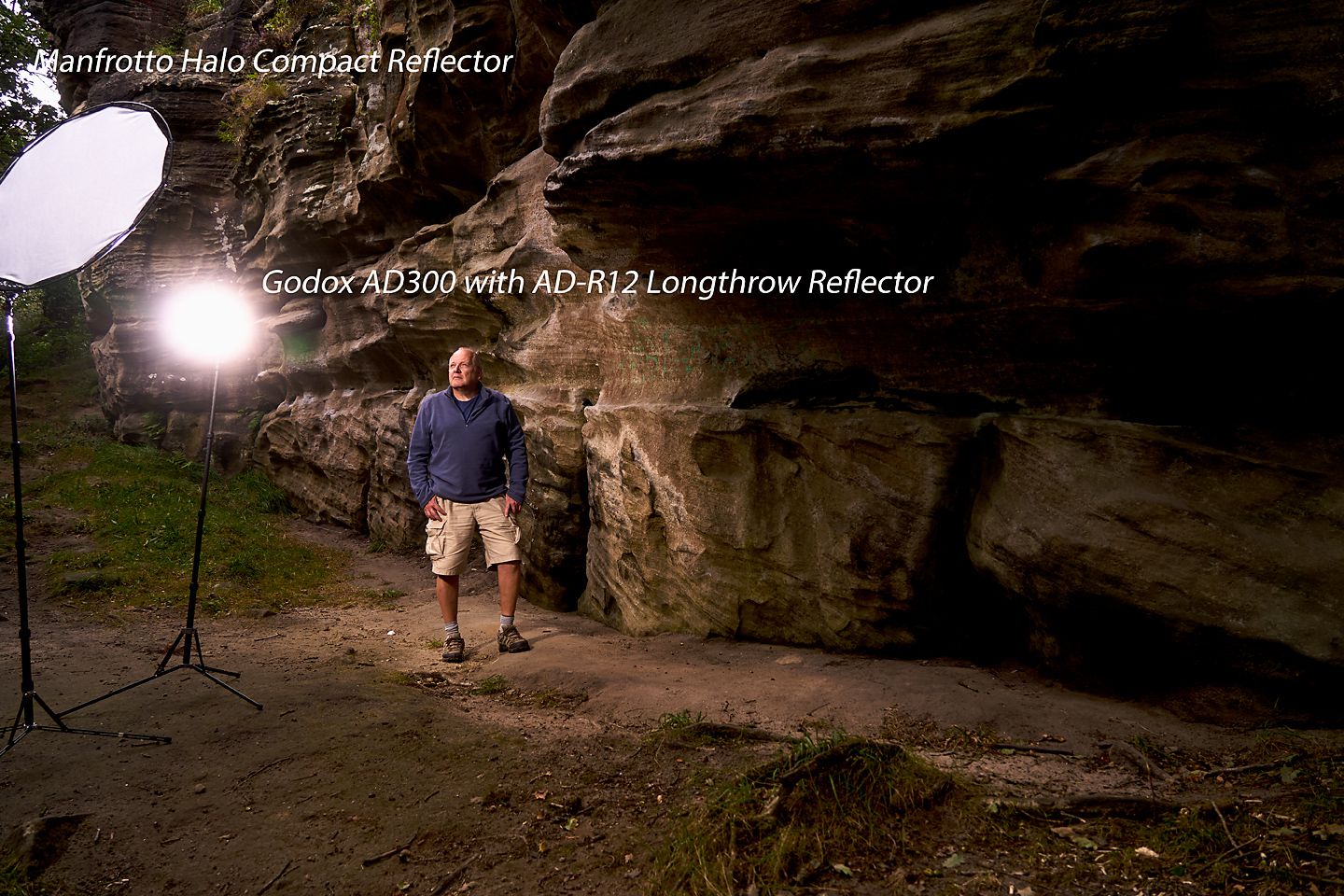
Behind The Scenes Image One Light Setup
Sometimes when I want a larger light source but don’t or cannot use a larger lighting modifier like a large softbox, I use a Manfrotto Halo reflector and bounce the light from a Godox AD300 fited with a Godox RD14 reflector. doing this enables me to move and switch things up and keeps the lighting kit comapct and small. The Manfrotto Halo packs down to the size of a large purse and due to it construction is rigid, its a really versitile bit of kit and ideal if you want the area of lighting to look larger.
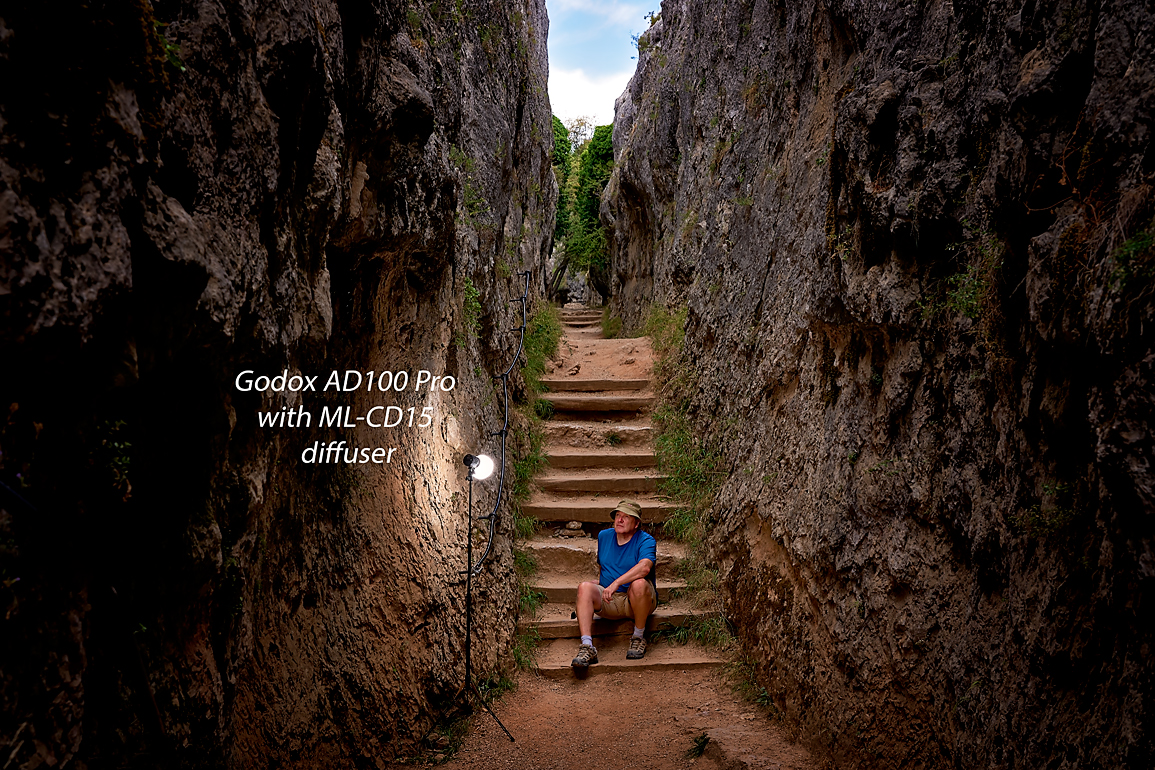
Behind The Scenes Image Ultra Portable One Light Setup With A Godox AD100
sometimes you just want some fill flash and due to the Godox AD100’s size and weight its ideal for ultra light set ups. here I am using a Godox dome diffuser. This it the type of setup that I started with years ago when I started out with flash

This is another example of how flash can be so useful and versitile. This image was taken in 2025, it’s The London To Brighton Veteran Car Run on The Mall in London on a very early wet November morning around about 7.30am. Hard lighting works really well here for numerous reasons, the light needed to be thrown over a large distance (The Mall is a very wide road) I also need to shoot in HSS to overcome my camera flash sync speed as I wanted to shoot at 1/1000 of a second. So what strobe did I use to acheive all of this? A Godox AD100 paired with a Profoto Clic Magnum reflector. The Clic Magnum is a really great little bit of kit, it effectilvy provides the equivilent of an extra +2 stops of light, so when you are using a tiny light like a Godox AD100 in HSS and need to throw your light further, that additional bit of light makes all the difference.
If you have read this far, thank you! Should you have any questions about this blog, please drop me an email and I will answer them.
Many Thanks
Fletcher